About Plantations on San Salvador
Fortune Hill Plantation - A piece of history on San Salvador
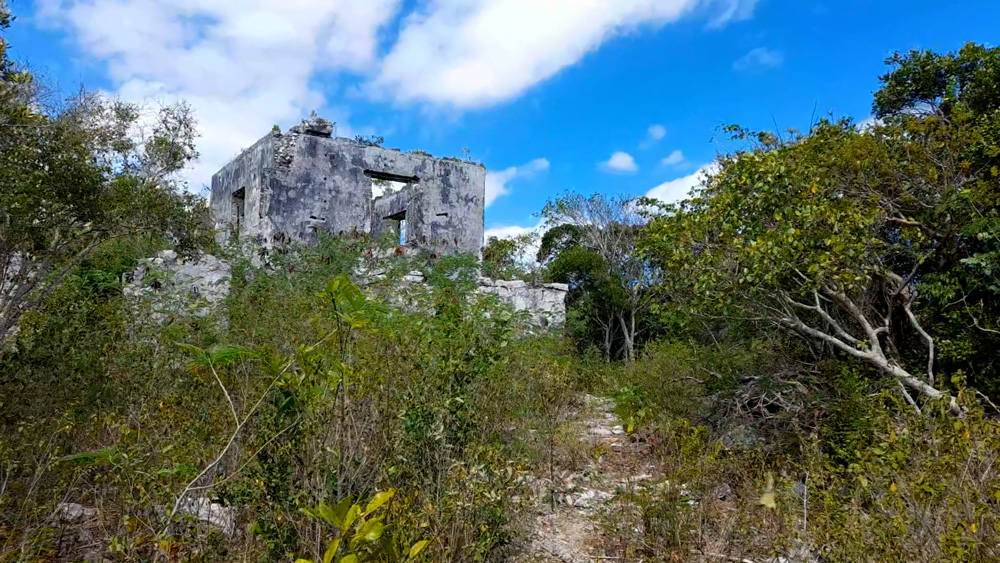
On the east side of San Salvador Island, hidden among low scrub and limestone ridges, lie the quiet remains of Fortune Hill Plantation — one of the island’s most important historical sites. Today the area is peaceful and largely overgrown, but the ruins tell the story of the brief and turbulent plantation era in the Bahamas.
A Loyalist Cotton Plantation
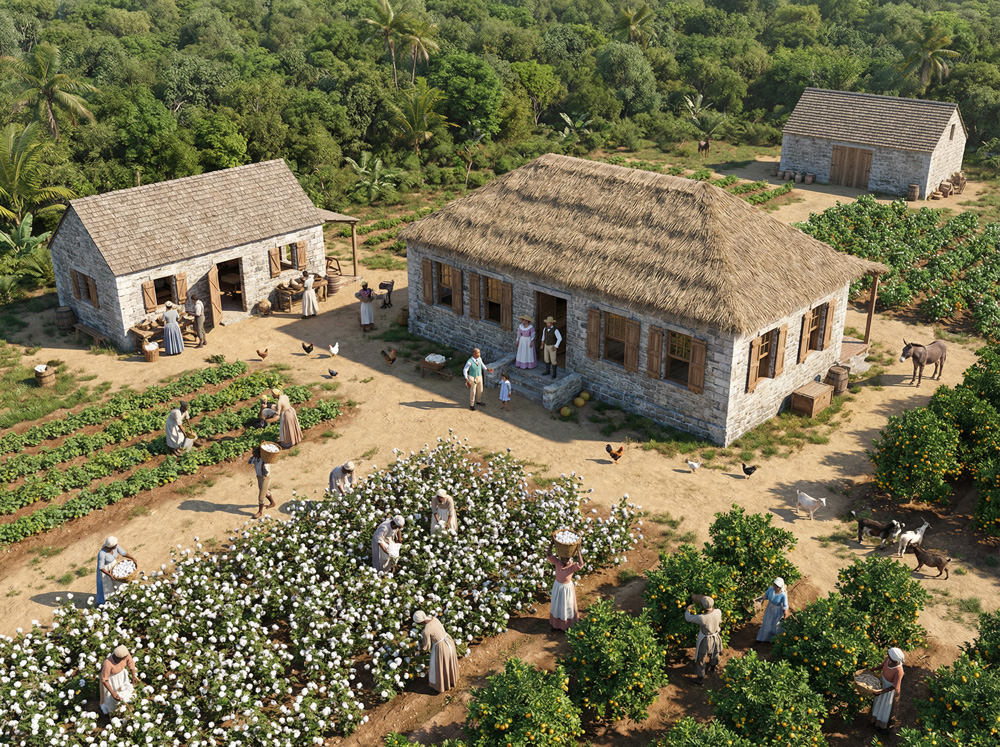
Fortune Hill Plantation was established in the late 1700s by American Loyalists who fled the United States after the American Revolution. These settlers were granted land in the Bahamas by the British Crown as compensation for their loyalty to Britain. The plantation is believed to have been owned by Burton Williams, and it is thought to have been one of the earliest and largest plantations on San Salvador. Like most plantations in the Bahamas at the time, Fortune Hill was designed primarily for cotton production. The thin limestone soils of San Salvador could support cotton, which briefly became a major crop across many Bahamian islands.
Life on the Plantation
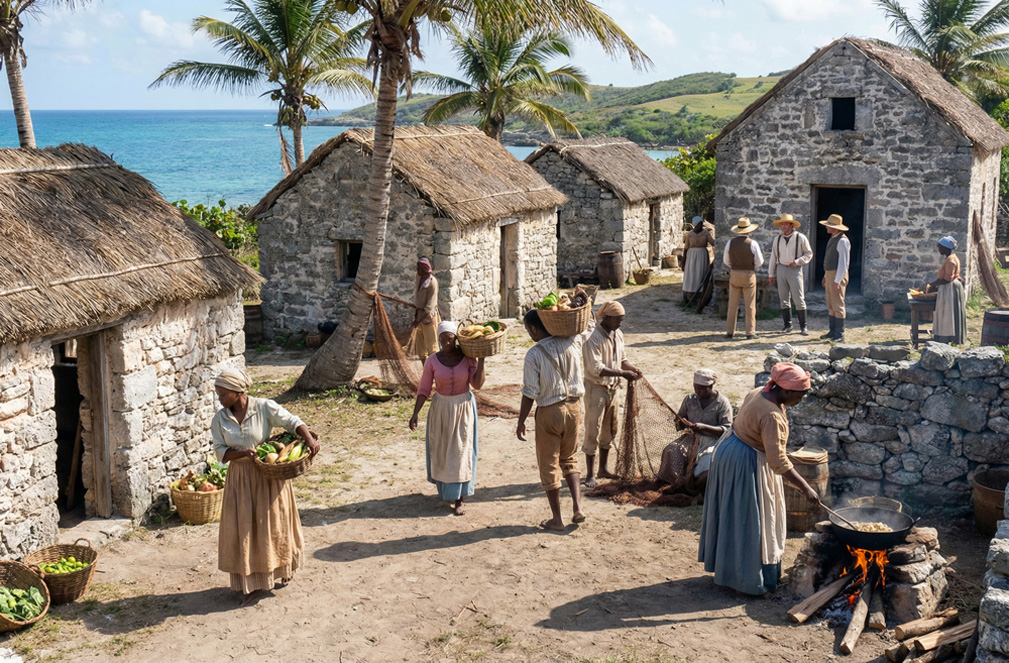
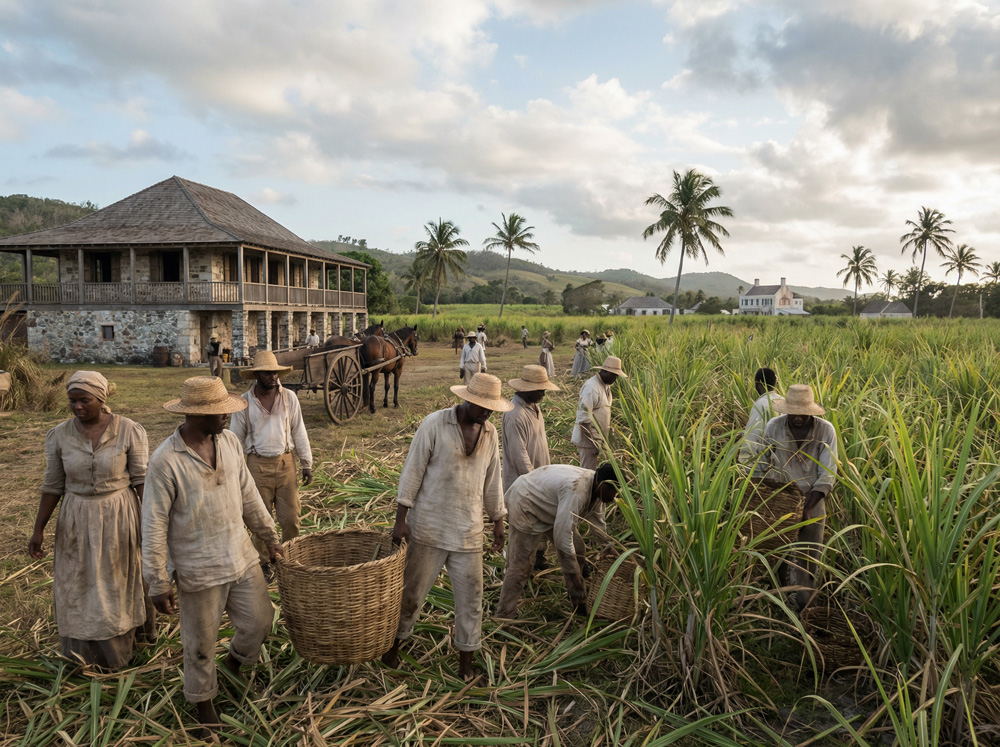
Plantations like Fortune Hill relied on the labor of enslaved Africans brought to the island by Loyalist settlers. Their work involved:
- * clearing rocky land
- * planting and harvesting cotton
- * maintaining buildings and fields
- * domestic work in the plantation house
The plantation landscape would have included several key structures:
- * the planter’s house (great house) on elevated ground
- * slave quarters, usually smaller stone cabins
- * storage buildings and kitchens
- * fields separated by stone walls
Archaeological studies of Bahamian plantations show that these sites were often laid out to emphasize social hierarchy, with the planter’s residence occupying the most prominent location and laborers’ dwellings placed at a distance.
A Short-Lived Economy
Despite the ambitious plans of Loyalist settlers, the plantation economy on San Salvador did not last long. Several problems quickly undermined cotton farming:
- * thin, rocky soil
- * insect infestations
- * hurricanes
- * transport difficulties
By the early 1800s, many plantations across the Bahamas were already failing. When slavery was abolished in the British Empire in 1834, the plantation system effectively collapsed. Many Loyalist owners left the islands, while formerly enslaved people and their descendants became the foundation of the island’s modern settlements.
The Ruins Today
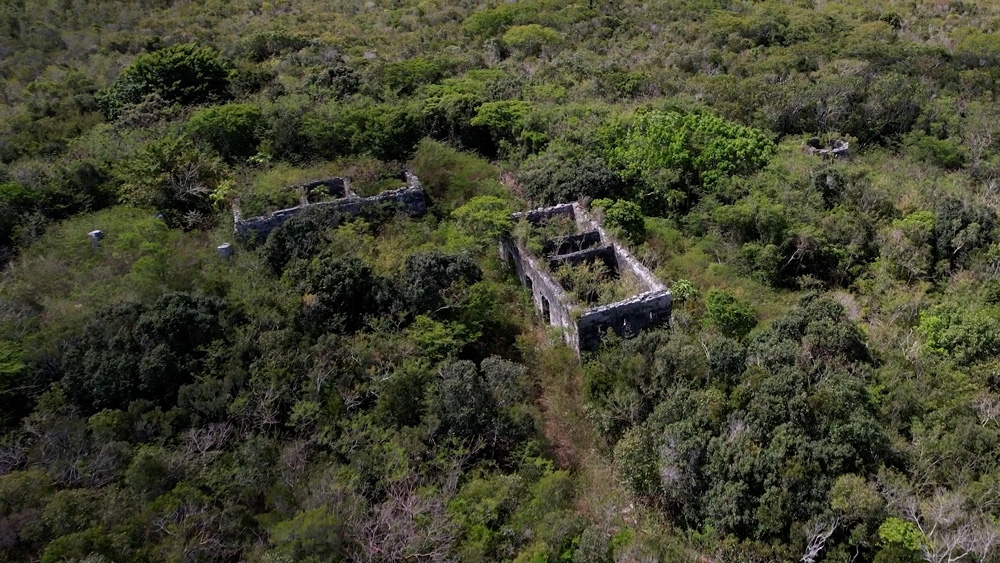
Today, the Fortune Hill site is mostly ruins, but visitors can still find:
- * remnants of stone walls
- * foundations of plantation buildings
- * traces of the original settlement layout
The area around Fortune Hill Settlement offers a tangible link to the island’s colonial past and to the difficult history of slavery that shaped the Bahamas.
A Quiet Window Into the Past
Walking around Fortune Hill today, it is easy to imagine the landscape as it once was: cotton fields stretching toward the sea, stone houses on the hill, and the daily rhythms of plantation life more than two centuries ago. For visitors interested in the deeper history of San Salvador, the site offers a powerful reminder that the island’s story is not only about beaches and turquoise water, but also about colonial ambition, hardship, and resilience.
The Loyalist Plantation Era of San Salvador Island
Today, San Salvador Island feels quiet, remote, and largely untouched. But for a short period in the late 1700s, the island experienced a burst of ambitious settlement during what historians call the Loyalist Plantation Era. Stone ruins scattered across the island — at places like Fortune Hill, Sandy Point, and Dixon Hill — are the remaining traces of this fascinating but short-lived chapter in Bahamian history.
When the American Revolution Changed the Bahamas
The Loyalist era began after the American Revolutionary War (1775–1783). Thousands of American colonists who had remained loyal to the British Crown — known as Loyalists — were forced to leave the newly independent United States. To compensate them for their losses, Britain granted land in several colonies, including the Bahamas. Between 1783 and 1785, waves of Loyalists arrived in the Bahamas with:
- * their families
- * enslaved African laborers
- * farming equipment
- * hopes of creating profitable plantations
San Salvador, then called Watling Island, became one of the islands where these settlers attempted to build a plantation economy.
The Cotton Boom That Failed
The crop Loyalists hoped would make them wealthy was Sea Island cotton, a valuable variety known for its long, silky fibers. At first, the plan seemed promising. San Salvador offered:
- * warm climate
- * long growing seasons
- * coastal breezes that helped cotton plants thrive
Plantations were quickly established across the island, including at:
- * Fortune Hill
- * Sandy Point
- * Pigeon Creek
- * Dixon Hill
Stone walls were built to divide fields, and plantation houses were constructed on higher ground where breezes offered relief from the heat. But the boom did not last long.
The Challenges of Farming on San Salvador
The Loyalists soon discovered that farming on San Salvador was far more difficult than they expected. Several factors worked against them:
- * Thin limestone soil Much of the island sits on rocky limestone, with only a shallow layer of soil. Clearing land for farming was extremely labor-intensive.
- * Insects and crop diseases Cotton crops were often devastated by pests, particularly the cotton worm.
- * Hurricanes Powerful storms periodically destroyed fields and buildings.
- * Isolation San Salvador was far from major trade routes, making it difficult and expensive to export crops.
Within only a few decades, many plantations were abandoned.
The People Behind the Plantations
Like plantation systems throughout the Caribbean and American South, San Salvador’s plantations relied heavily on enslaved African labor. Enslaved workers cleared land, built stone structures, planted and harvested cotton, and performed domestic work within plantation households. After slavery was abolished in the British Empire in 1834, plantation agriculture effectively ended on San Salvador. Many plantation owners left the island, while formerly enslaved people and their descendants became the foundation of the island’s modern communities.
The Stone Ruins That Remain Today
One of the most remarkable aspects of San Salvador’s Loyalist period is how much of it is still visible. Visitors exploring the island may notice:
- * low stone walls stretching through the bush
- * foundations of plantation houses
- * old wells and cisterns
- * collapsed slave dwellings
These structures were built using local limestone, cut and stacked by hand. Over two centuries later, many still remain. One of the best known sites is Watling’s Castle at Sandy Point, believed to have been the island’s largest plantation complex.
A Brief but Defining Chapter
Although the plantation economy on San Salvador lasted only a few decades, it had lasting consequences. It shaped:
- * the island’s settlement patterns
- * its cultural heritage
- * its historic landscapes
The scattered ruins seen today are reminders of both the ambitions of the Loyalist settlers and the resilience of the people who lived and worked through this difficult period.
Discovering History in the Landscape
One of the most unique aspects of San Salvador is that history here is not locked away in museums. It lies quietly across the island’s hills, fields, and coastal ridges. While exploring the island, you may come across:
- * stone walls disappearing into the brush
- * foundations hidden beneath sea grape trees
- * the remains of buildings overlooking the ocean
Each of these is part of the story of the Loyalist plantation era, a time when San Salvador briefly stood at the center of an ambitious agricultural experiment in the Bahamas.